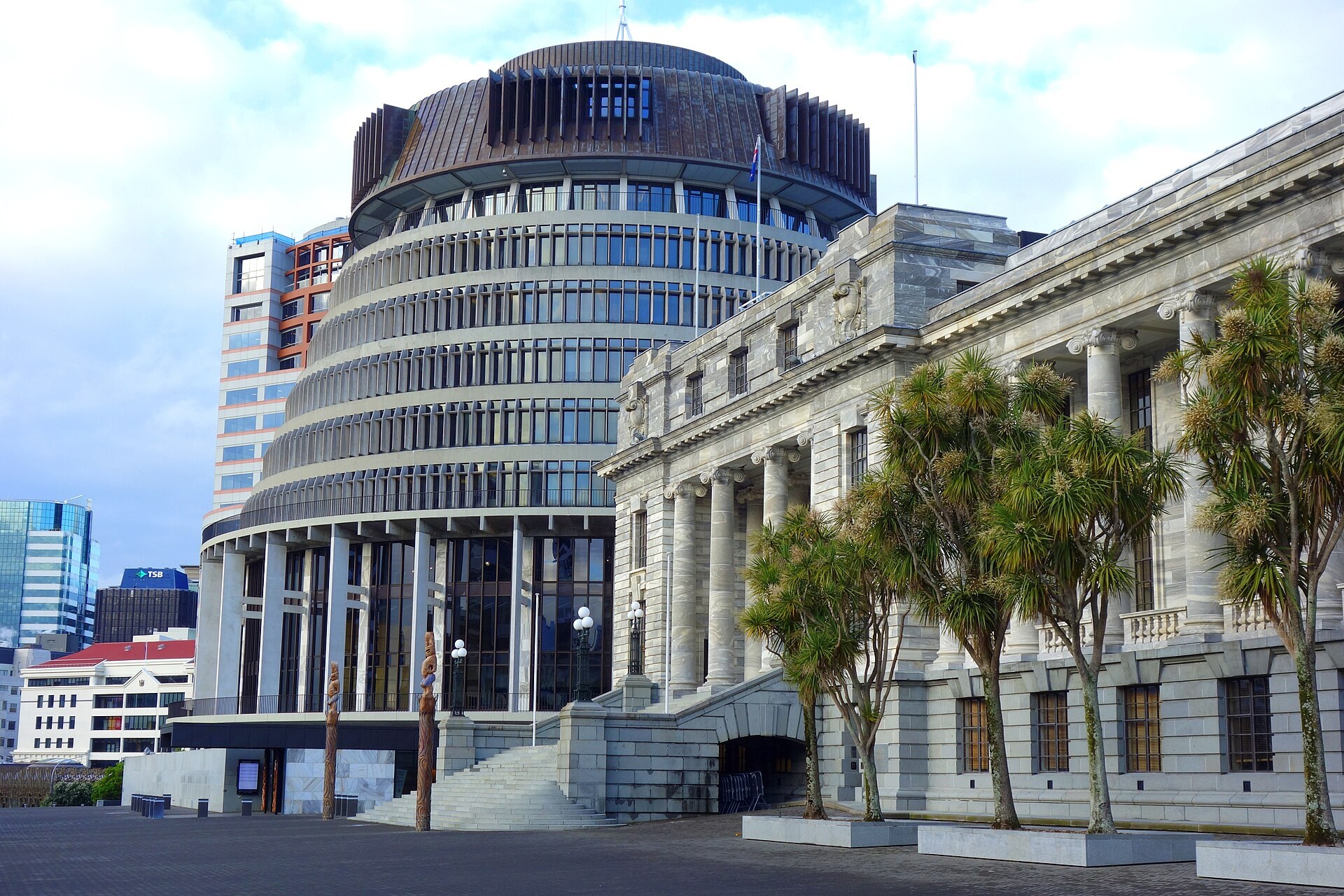
On 14 November 2024, New Zealand’s Parliament was voting on whether to send the Treaty Principles Bill forward. As the smallest party in the House, Te Pāti Māori was the last to vote. When it was asked to state its party’s votes, Hana-Rāwhiti Maipi-Clarke stood, declared its six votes against the bill, tore up a copy of it and began a haka, a Māori ceremonial challenge. The party’s two co-leaders joined her, people in the public gallery took it up, and the Speaker suspended the sitting of the House.
On 7 November 2026, the voters of her seat answered. Māori voters have their own seven electorates, or constituency seats, and preliminary results show Maipi-Clarke won hers, Hauraki-Waikato, by more than 10,000 votes. In 2023 she had won it by 2,911. The party’s co-leaders, Rawiri Waititi and Debbie Ngarewa-Packer, also kept their seats. Official results are due on 27 November, after the special votes (ballots cast outside a voter’s home electorate, from overseas, or by people who enrolled late) are counted, so every figure here is preliminary. Between the haka and the election, Parliament suspended all three for longer than it had ever suspended anyone. The question is whether the punishment fitted what they did.
The bill died. The punishment stayed.
The bill the three MPs protested did not pass. It cleared its first reading, the vote the haka interrupted, and went to public submissions. More than 300,000 people submitted, and a hīkoi, a protest march, of about 42,000 people reached Parliament. On 10 April 2025 the bill was voted down at its second reading, 112 to 11, with only the ACT party in favour. The cause the MPs fought for won.
Their punishment did not follow it into the bin. In May 2025 Parliament’s Privileges Committee, the group of MPs that judges breaches of parliamentary rules, recommended 21 days’ suspension for Waititi and Ngarewa-Packer and seven days for Maipi-Clarke, without pay. On 5 June, Parliament confirmed the penalties. Before that day the longest suspension of any MP had been three days, given to the former prime minister Robert Muldoon for criticizing the Speaker in the 1980s. Maipi-Clarke had also already been suspended for 24 hours on the day of the haka. The Speaker, Gerry Brownlee, himself called the proposed punishment very severe, and said the committee had approved it by a slim majority.
This raises the first hard question, and the record answers only part of it: why were two Māori co-leaders given 21 days when the longest any MP had received before was three? Parliament’s own senior official, the Clerk, had advised the committee. According to RNZ’s analysis, the Clerk said a suspension of up to seven days would be in line with the penalty for an MP the Speaker had formally named for misconduct twice in one term, and that anything much longer would be a major departure from the House’s practice. He added that a long suspension should have broad support among members, and asked the committee to explain how each penalty was proportionate. The committee, the analysis says, appears to have set that advice aside, and its report gave little reasoning. We could not find a published explanation of why it chose three times the Clerk’s ceiling for the two co-leaders. The committee’s chair at the time, Judith Collins, who has since left Parliament to lead the Law Commission, said the matter was not about the haka or the Treaty. If so, the committee owes the public an account of why leaving their seats during a haka needed, for the two co-leaders, a penalty that Ngarewa-Packer called seven times harsher than any before it. One caution on the numbers: the House’s own record says only “21 days”, and reports differ on whether that counts sitting days or calendar days. We have asked the Clerk’s office, and have put the same questions to Te Pāti Māori, including when each MP returned to the House. Replies, if they come, will be added.
Who else broke the rules, and what happened to them
The second question is whether the penalty fell on these three because of what they did or who they were. Suspensions before this were not only for Māori: Muldoon, the previous record-holder, was not Māori. Māori MPs are, though, the only MPs ever suspended for more than three days.
Comparing cases is more useful than guessing at motive, and the nearest comparisons are in the same Parliament. Labour’s Peeni Henare, who is also Māori and left Parliament in March 2026, stepped onto the floor during the same haka, was found to have acted in a disorderly way but not in contempt of the House, meaning not in a way that seriously obstructed it. He attended the committee, apologized, and was not suspended. By the Herald’s account he also did not approach David Seymour, the ACT leader and the bill’s author, as the Te Pāti Māori MPs did. RNZ’s analysis also points to the Green MP Julie Anne Genter, who in 2024 was found to have been disorderly and intimidating after leaving her seat and shouting at a seated MP from close range. She was censured, asked to apologize, and not suspended. What separates the three from Henare is that they did not attend the hearings and did not apologize for the haka itself. Maipi-Clarke had privately apologized to the Speaker for disrupting the vote, and the committee noted some contrition in her written statement. Her penalty was shorter. That matters for the argument, and we come back to it below.
The process around the three MPs was also questioned. They did not appear at the committee’s first hearing and declined to appear at a second. Their lawyer said the rules needed to take account of tikanga, the Māori body of custom and law, and an analysis in the East Asia Forum reports the committee refused their request to hear a tikanga expert. The same analysis says the committee chair accused the three of stopping ACT from voting, but ACT had already voted before Te Pāti Māori. We are not saying that proves anything about motive. We are saying a body that sets a record punishment is expected to show its working, and we could not find where it did.
What the voters said, and what they did not
The election result looks like an answer, and in part it is. Maipi-Clarke’s margin rose from under 3,000 to over 10,000. Waititi and Ngarewa-Packer won again. The result is less clean than it first appears. Waititi’s lead is only about 2,300 votes, against nearly 16,000 in 2023, and his closest rival this time was a Green candidate, not Labour. New Zealand voters cast two ballots, one for a local seat and one for a party, and Ngarewa-Packer said her party asked voters to give it only their electorate vote, a strategy she called extremely successful. That strategy also means the party’s own party-vote result tells us little about how voters judged the haka.
The party’s year was also turbulent. It expelled two of its own MPs in November 2025, and one of them won a court case against her expulsion in March 2026. It holds five Māori seats, one fewer than in 2023. Even so, the plain reading is that voters in the three electorates did not punish these MPs a second time. The vote cannot tell us why, or whether voters thought the suspensions were right.
What the election did change is the arithmetic. The result was at first too close to call, and preliminary figures give the right-wing coalition 67 of the 131 seats, a bare majority. In a Parliament this closely divided, the open question is whether a governing majority could use the Privileges Committee against an opposition. The precedent now exists.
The fair counterargument
The case for the penalty deserves its strongest form. Rules of order protect every member, including the smallest party’s, and they bind everyone. The ACT MP Parmjeet Parmar, who sat on the committee, said the issue was intimidation, and she pointed to a finger-gun gesture Ngarewa-Packer made toward ACT’s MPs. The haka was performed in front of ACT’s benches during a vote. Karen Chhour, an ACT minister who is herself Māori, said the three MPs’ lack of remorse was a factor in her support for the penalty. Henare, by contrast, attended and apologized. If the three had come to the hearings and said they went too far, the argument goes, the sanction would have been lighter. That is a real argument, and it explains part of the gap.
It does not explain all of it. A refusal to apologize is a reason for a heavier penalty. It is not obviously a reason for a penalty above anything before it and above what the Clerk said fitted the breach. The MPs said the process could not judge a cultural act without tikanga, and the committee refused to hear tikanga evidence. A penalty can punish a rule broken, or punish a defiance of the body that enforces the rule. A reader is entitled to ask which one this was.
What should change
Three steps would help. First, Parliament’s rules, which are called Standing Orders, should state a range of penalties for disruption of a vote, so the next committee does not invent a number. Second, any suspension longer than the Clerk’s guidance should need broad support among MPs, as the Clerk advised, and the committee should publish its reasons. Third, the opposition’s call, in June 2025, for a tikanga committee to review how Parliament treats haka should be answered. We found no result from that call. A complaint by Lady Tureiti Moxon reached the United Nations committee on racial discrimination in Geneva, and it cites the suspensions among other grievances. We found no ruling.
The bill the MPs fought was defeated, and the three MPs appear to have been re-elected. What is not settled is the rule that sent them out. If the coalition’s preliminary majority holds after the official count on 27 November, the same governing parties that voted for the penalty will decide whether the Standing Orders change or the precedent stands.
Comments
Every comment is read by a person before it appears, so yours will not show straight away. We publish comments that are civil and on the subject. To report a mistake in the piece, use the corrections page, so it is fixed in the piece itself.