Editor’s Note: Nhlanhla Nkosi describes himself as a gender-based violence specialist at the African Development Bank in Pretoria. The views in this series are his own. I checked the main figures in this piece against the reports linked in the text.
Ismail Abukar
Gracious Nkomo, 28, was reportedly working at a lodge in Kempton Park, east of Johannesburg, when she disappeared. A missing-persons alert about her circulated for more than two weeks. On September 10 her body was found beside the R21 highway, partly clothed and decomposed. She was the third woman found in the area that day. Her family identified her at the Germiston mortuary a week later, the Daily Maverick reported.
Six weeks after that, on October 21, Finance Minister Enoch Godongwana set out what the state would spend to stop it happening again: R5.1 billion. About three-quarters of it, R3.8 billion over three years, is for hiring more than 3,500 social workers. Only R186 million, under 4 percent, is for forensic services, investigators and clearing the backlog of cases, EWN reported. The same month, Parliament was told that just 1.5 percent of the DNA profiles produced in the last financial year were finished within the 30 days the law sets, the Daily Maverick reported.
This is the first of three pieces in The Anatomy of an Endless Disaster, a series on South Africa’s femicide crisis. The second looks at where women are attacked, and the third at how violence starts. All three are on the series page.
From refusal to declaration
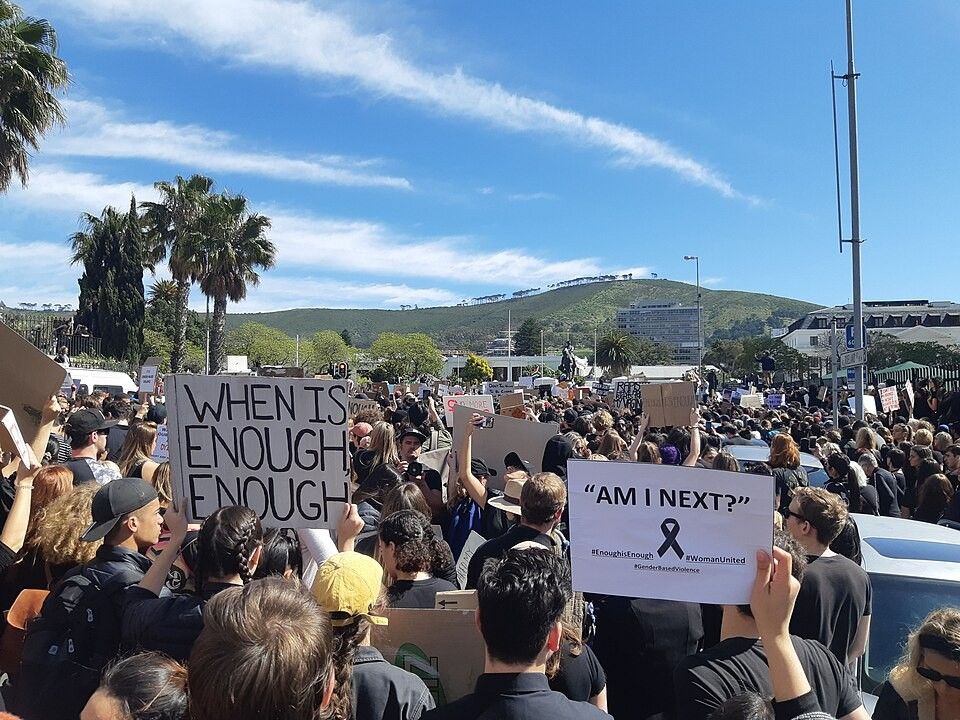
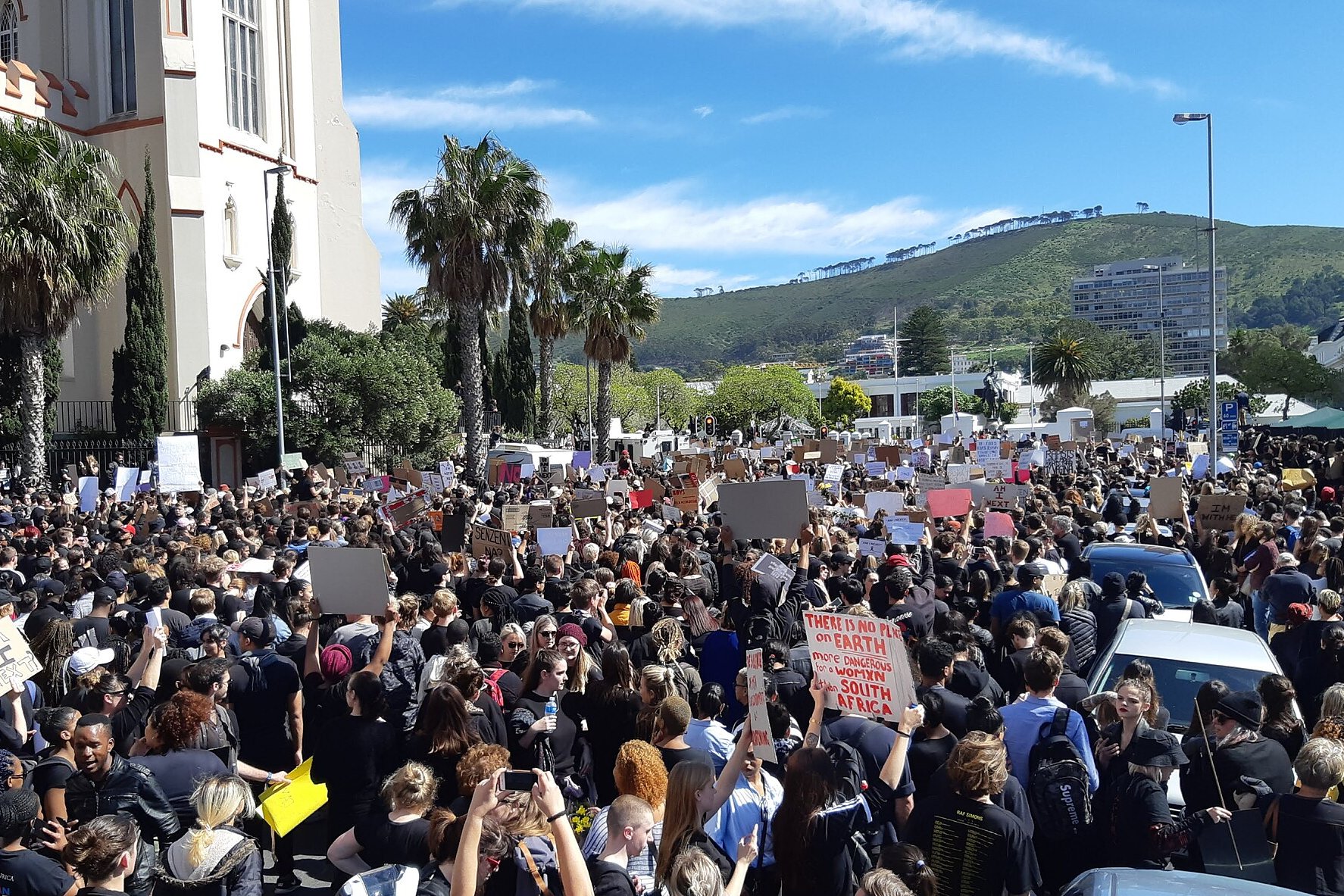
The money follows a reversal. The government first said no. In April 2025 the group Women For Change marched to the Union Buildings in Pretoria with a petition asking that gender-based violence and femicide be declared a national disaster. The National Disaster Management Centre rejected it, EWN reported. The petition kept growing and passed one million signatures in November. On November 21 the group held a national shutdown, asking women to withdraw their economic activity, a day before world leaders gathered in Johannesburg for the G20 summit. In the same month the head of the centre reversed the position and classified gender-based violence and femicide as a national disaster, the Mail & Guardian reported. The group’s founder, Sabrina Walter, said the petition had been backed by more than 1.1 million people.
A classification is not a state of disaster. It switched on no emergency powers, and the government said it would work through existing laws and programmes. A legal analysis published on Polity in August noted that no disaster regulations specific to gender-based violence have been issued, unlike during the COVID-19 declaration, when binding rules closed public spaces.
Then the killings in Ekurhuleni made the gap impossible to ignore. At least 11 women were killed between mid-July and September 27, Africanews reported. Their bodies were found in places including Kempton Park, Dawn Park, KwaThema, Tembisa and Springs. Police have not confirmed that one person is behind all the deaths, and at least one case was linked to a local dispute. On September 29, President Cyril Ramaphosa gave municipalities 60 days to audit unsafe areas such as places with broken streetlights and abandoned buildings. He gave police and prosecutors 90 days to review unresolved cases of murder, rape and other gender-based violence. Both deadlines, in late November and late December, fall after the local elections on November 4.
Where the money goes
Treasury says the R5.1 billion is not new money. It is moved from existing budgets, including expected savings of R6.2 billion from stricter checks in the social grants system, a sum EWN says is shared with the fight against child malnutrition. The minister’s speech also gives R157.4 million to the Department of Women, Youth and Persons with Disabilities for coordination and oversight. The amounts the speech itemises add up to about R4.1 billion, and The Field found no source that says where the rest of the R5.1 billion goes. Neither the speech nor the reports say over what period the R186 million falls, so the under-4-percent figure compares the headline amounts. By 2028/29 it also aims to raise the number of sexual offences courts from 55 to 101, and the number of Thuthuzela Care Centres, which offer rape survivors medical care, counselling and help with the police and court process in one place, from 72 to 80.
Groups that work with survivors say the amount is only part of the question. Greer Schoeman of the National Shelter Movement of South Africa said frontline staff are stretched and underpaid, and that funding must be traceable from the moment it is allocated to the moment it is spent, the Star reported. Faith Khanyile of the GBVF Response Fund proposed a dedicated R3 billion over three years as a starting point, and said how the money is allocated matters as much as the amount.
The evidence gap
The courts and care centres sit at the end of a chain that starts with evidence, and that is where the Daily Maverick’s DNA figures are most troubling. The paper reported that nearly 250,000 forensic exhibits had not been processed within the statutory deadline. The 1.5 percent figure came from a presentation to Parliament by Akhona Ndlela of the National Forensic Oversight and Ethics Board. The police work to a 90-day target instead of the 30 days in the law. Ian Cameron, who chairs Parliament’s police committee, called that target an “arbitrary decision by SAPS” and said the board agreed it should not be used, because it makes the figures look better than they are.
The police are also under scrutiny. The Independent Police Investigative Directorate (IPID) registered 116 rape cases against police officers in 2025/26, up from 95 the year before, with 72 of them involving officers on duty, according to IPID data reported by eNCA and Briefly News. The fullest public picture of what follows is older. GroundUp reported that IPID registered 964 rape cases against officers between 2012 and 2020, that police dismissed only 50 officers for rape in that time, and that as many as 97 percent of the officers investigated were not convicted. IPID blames part of this on delays in forensic technical reports.
A joint inquiry by the Commission for Gender Equality, the South African Human Rights Commission and the CRL Rights Commission is examining how the criminal justice system handles gender-based violence. After what it called an overwhelming public response, it extended the inquiry, with hearings scheduled from September 29 to October 2, SAnews reported. The Field found no published findings when this piece was written.
Set the facts side by side and the shape is plain. The label carries no new powers. The money is moved from other budgets. The slice that touches the evidence, which is what turns a body beside a highway into a name on a charge sheet, is under 4 percent, in a system where, by the DNA board’s own figures, almost no profiles are finished on the legal clock. Social workers matter, and so do courts and care centres. But a case that has no evidence rarely reaches either.
What to watch. Whether the declaration changes anything will show first in two places. One is whether the audits and case reviews due in November and December produce results the public can read. The other is whether Treasury publishes how much of the R5.1 billion actually reaches shelters, forensic laboratories and investigators, and not only the headline figure. Gracious Nkomo and the women found near her in Kempton Park are cases that will be solved, if they are solved, by evidence.
Comments
Every comment is read by a person before it appears, so yours will not show straight away. We publish comments that are civil and on the subject. To report a mistake in the piece, use the corrections page, so it is fixed in the piece itself.