
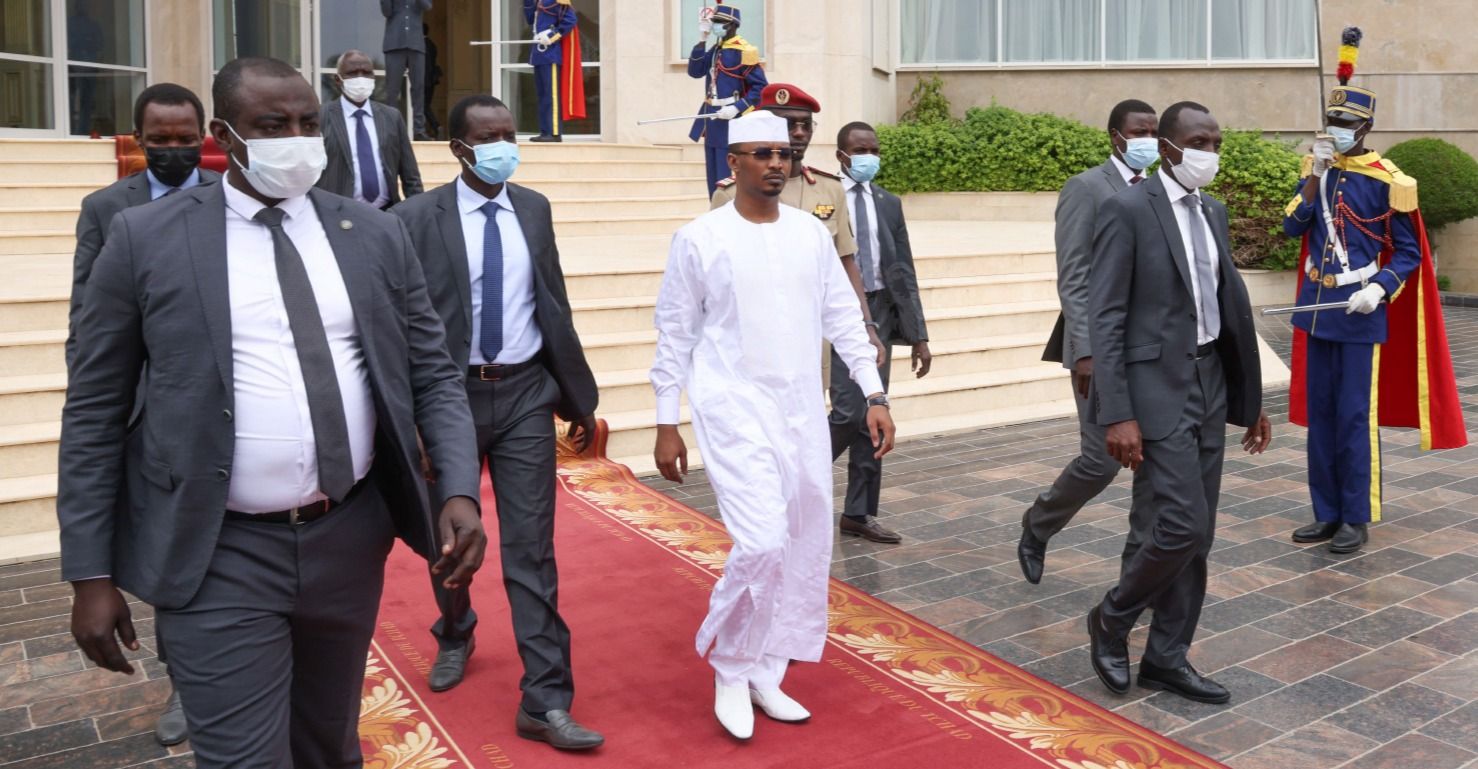
On January 22, 2025, Chad’s state broadcaster MRTV published a letter from the president, signed “Maréchal Mahamat Idriss Deby Itno.” It answered his older brother, General Adam Idriss Deby, whose own open letter calling on him to resign had been spreading on social media, Alwihda Info reported. The president’s reply turned to family history. It asked how his brother had become a general at all, and it dated the quarrel to September 20, 2014, when their late father put the younger man at the head of the directorate that guards the presidency and left Adam as chief of staff beneath him. In the president’s account, Adam “never accepted” serving under a younger brother, walked away from his post and went into exile. Le Soleil called it a public quarrel between brothers.
Eight weeks later, on March 19, 2025, a decree numbered 0331/PR/2025 named another brother, Daoussa Idriss Déby Itno, minister and private secretary to the president. RFI reported that he was about thirty and had been made a general when his brother took power. The president had asked in public how one brother became a general. For the one he promoted, he gave no reason, and no public list tells a reader who holds the post today.
Chad’s president named three of his brothers to senior posts at the palace between November 2024 and June 2025. One has since been replaced. For the other two, I found no decree or report in 2026 that confirms them in place or removes them. The presidency has not answered the criticism that decrees are used to appoint relatives. Because no official, searchable list shows who holds each post or why, nobody outside the palace can check whether these jobs went to the best-qualified people. That gap, and not the family tie alone, is the problem.
This is the second country in First Families, a weekly series that sets out which relatives of ruling families hold which posts. On October 4, it covered Tanzania. The aim is to cover all 54 African countries, one a week.
How the family came to power
The family’s hold is older than any of these decrees. On April 20, 2021, the army announced that the president of thirty years, Idriss Déby Itno, had died fighting rebels, and named his son, General Mahamat Idriss Déby Itno, head of a military council. In May 2024 the son was credited with 61 percent of the vote, after rights groups said the election would be neither credible nor fair.
Three brothers, three decrees
The brothers came into the palace one at a time. Abdelkerim Idriss Déby was named adviser for African and International Affairs at the presidency by a decree of November 15, 2024, Tchadinfos reports. It calls him the president’s half-brother and says he had been director of the civil cabinet since April 2022, so he was no newcomer to the palace. Sources differ on whether he is older or younger than the president, so I do not say. A decree of July 14, 2025 replaced him in that post with General Ahmat Kogri, and no report I read gives his current role.
Daoussa, the president’s younger brother, took the private-secretary post from Ahmat Kogri in March 2025, and Kogri was set aside “without a new posting for the moment,” AllAfrica reported. Kogri is not described as a relative. He came back as the adviser who replaced Abdelkerim in July 2025, and a decree dated September 21, 2026 named him foreign minister, AllAfrica reports. Zakaria Idriss Déby Itno, another brother and a son of the late president, was named special adviser to the presidency with the title of minister by a decree of June 10, 2025, Tchadinfos reports, and it says he had been Chad’s ambassador to the United Arab Emirates.
The president’s circle is wider than his brothers. Ousman Adam Dicki is his cousin and brother-in-law. The Africa Report, in an October 14, 2024 profile by Jeune Afrique’s Mathieu Olivier, says his mother, Aïcha Déby, is the late president’s younger sister, and that he is married to one of the president’s sisters. It describes him as head of the Rapid Intervention Force, created in 2023 and meant, it says, to offset the older presidential guard, “with a large budget and massive recruitment.” Alwihda Info reported on May 27, 2026 that a decree raised him and three other officers, as an exceptional measure, from général de division to général de corps d’armée, a higher general’s rank.
Ismaël Souleymane Lony, by contrast, is not a relative. He was director-general of the National State Security Agency when he was made a minister on the same day as Daoussa, and RFI describes him as the president’s friend. President Déby publicly renewed his confidence in him in August 2025 after a leaked audio recording of remarks attributed to him.
What the record does not show
What the record leaves out is more telling than what it contains. I read the Tchadinfos and Alwihda Info archives through October 26 and found no 2026 decree or report removing Daoussa or Zakaria, and none confirming them in post. The April 2026 government list I could read does not name them, but presidency ministers may sit outside it, so that proves nothing either way. On August 19, 2026, a decree named Idriss Ahmed Idriss Secretary General of the Presidency, replacing Moustapha Mahamat Masri, who was moved to special adviser, but that does not concern the private-secretary post.
Every decree I found reached me through a news site, not through an official, searchable record. A reader today cannot confirm from public sources who holds the posts given to the president’s brothers in 2025. Without such a list there is also no way to see whether relatives are chosen by any standard, or only by the president’s preference.
The criticism, and the silence
The criticism is already on the record. Opposition leader Avocksouma Djona Atchénémou told RFI that Chad has lived for more than thirty years in a “dynastic system” in which decrees are used to appoint relatives of the ruling family, and that the late president did the same: “Déby père lui aussi privilégiait la famille” (my translation: the elder Déby also favoured family). Afrik.com described the March 2025 appointment as strengthening the family’s footprint. I found no answer from the presidency or government.
That silence matters because the preamble of Chad’s constitution, as published online, says earlier regimes created and sustained nepotism, and affirms the citizens’ total opposition to any regime founded on nepotism and clanism. The constitution sets a standard, the opposition says it is broken, and the presidency has given neither the qualifications nor the reasons that would let anyone judge. The case for merit, which may well be true for some of the men named, has not been made in public by the people who could make it. In January 2025 the president did explain, in public, how one brother rose and fell. He has not done so for the brothers he has since named.
He has removed relatives too
The president does remove relatives, which is part of the picture. In April 2025 he demoted and struck off ten senior officers for “serious misconduct” and dismissed three police officers, Koaci reported, among them his cousin, General Abdelrahim Bahar Mahamat Itno. Koaci says the general was reportedly accused over a WhatsApp voice message about overthrowing the president, and it uses the conditional throughout; Tchadinfos says it cannot confirm that the audio caused the removal. Koaci also notes tension inside the family and the Zaghawa clan. That is the one case I found in which a reason for a relative’s fate is on the record, and the reason given is the general’s alleged conduct toward the president. Loyalty appears to be the test the record shows, and merit is not.
A system where checking is hard
Two developments set the context; I found no source linking either to the family appointments. On October 3, 2025, parliament voted 236 to none among 257 lawmakers for seven-year presidential terms with no limit on re-election, AFP reported. And in August 2025 a court sentenced opposition leader Succès Masra to 20 years, a trial Human Rights Watch says was “based on politically motivated charges”; he was pardoned a year later.
A separate episode shows how hard it is for anyone in Chad to check what the state is doing. Nothing I read connects it to the family appointments. Chad’s anti-corruption authority, the AILC, was created in 2023. On August 12, 2026, the AILC said agents of the National State Security Agency handcuffed and detained its inspectors while they audited crude oil sales by the state oil company, SHT. SHT disputed that account. A decree of August 14, 2026 replaced the AILC’s controller general and its deputy controller general and gave no reason. The former controller general, Ousmane Abderaman Djougourou, says the audit found significant gaps between Chad’s crude sale prices and international reference prices, and says he asked to leave. The presidency, the security agency and the oil company have not, as far as I can tell, answered his claims in public.
Could it have gone differently?
Yes, cheaply. A president who names his brothers can publish, with each decree, what the post is, what the holder has done before and why he was chosen. A published list of palace posts and their holders, updated by decree, would let the opposition and the public check the claim of favouritism, and would let the presidency refute it. The cost is a web page. The president has instead chosen silence, and silence leaves the charge standing.
Comments
Every comment is read by a person before it appears, so yours will not show straight away. We publish comments that are civil and on the subject. To report a mistake in the piece, use the corrections page, so it is fixed in the piece itself.