
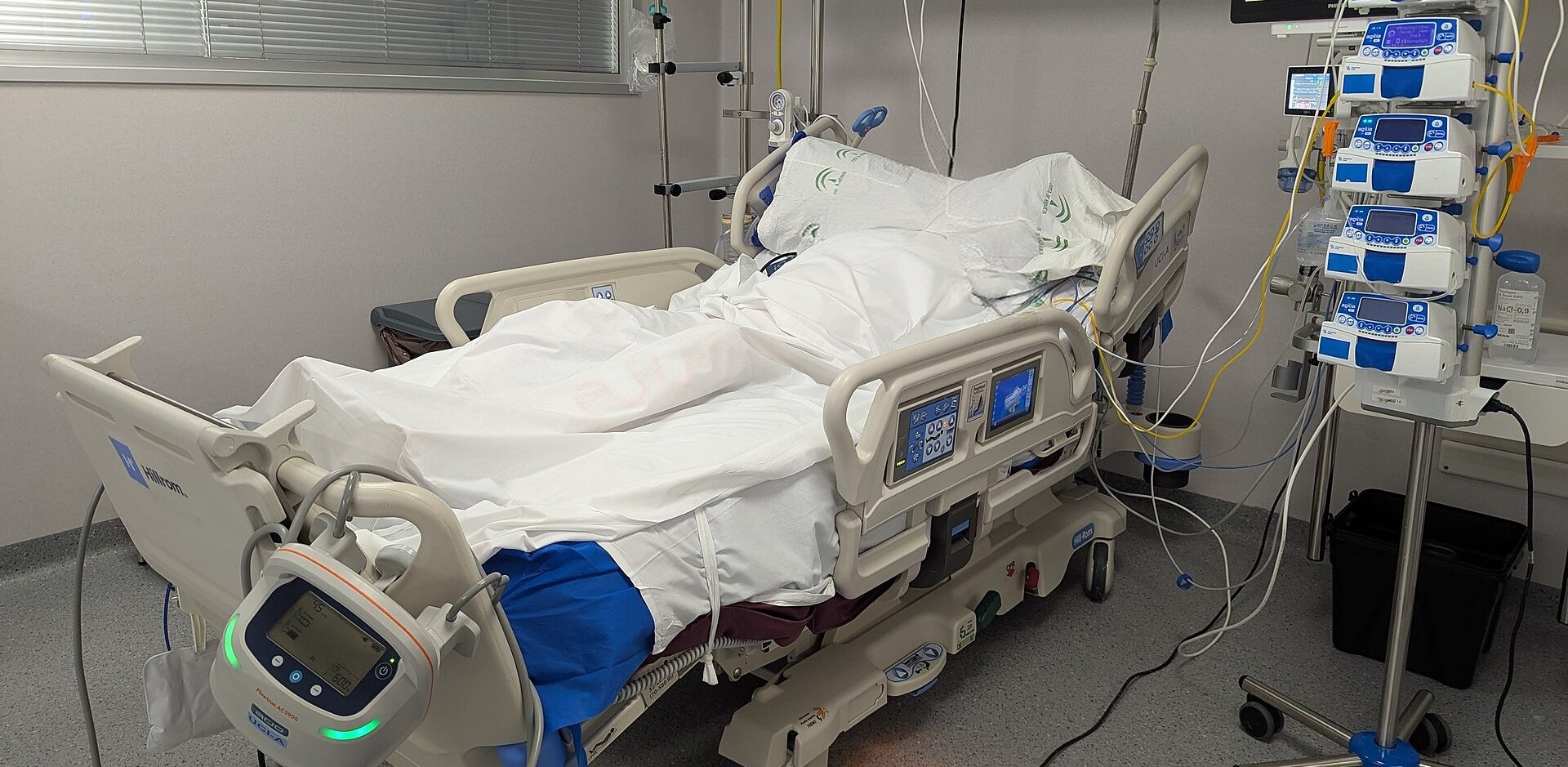
Update, 28 November: Mohamed Yusuf died on Saturday morning at Hennepin County Medical Center, two weeks after the attack, according to CAIR-Minnesota and the Minnesota Uber/Lyft Drivers Association, as reported by Fox 9 and KSTP. Samit Patel remains charged with attempted second-degree murder and first-degree carjacking, and KSTP reports prosecutors could change the charges now. I have seen no statement on Yusuf’s death from the county attorney or Hopkins police. Patel is out of jail on $800,000 bail with electronic home monitoring, according to Fox 9. Yusuf’s family plans a news conference on Monday. I wrote the rest while Yusuf was alive and have corrected the lines that are no longer true.
At about 1:20 on the morning of Saturday, Nov. 14, Hopkins police were sent to a report of a suspicious vehicle. Officers found a seriously injured man in a ditch near Hopkins Crossroad and Minnetonka Boulevard and took a suspect into custody nearby. The injured man was an Uber driver named Mohamed Yusuf, 51, according to MPR News. By his family’s account, a relative was on the phone with him during the ride and heard what happened.
On Monday, more than a hundred people stood outside Hennepin County Medical Center, where Yusuf was in critical condition after what his family says were multiple surgeries, and asked for something the police have not promised: a hate crime investigation. The Hopkins police chief, Brent Johnson, said the same day that investigators are weighing every possible motive, bias included. Hennepin County Attorney Mary Moriarty said in a statement that her prosecutors have been working with Hopkins police since Saturday, and that proving a crime was motivated by bias means proving it beyond a reasonable doubt. That sentence is the heart of this story. A community has already decided what happened. The law has not, and it asks for a different kind of proof.
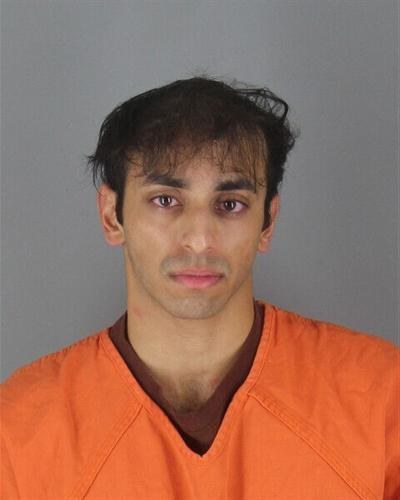
What is established is firmer than it was on Monday. On Tuesday, Hennepin County prosecutors charged Samit Apurva Patel, 25, of Hopkins, with attempted second-degree murder and first-degree carjacking, according to Fox 9 and KSTP, which reviewed the criminal complaint. He had been booked into the Hennepin County jail early Saturday on suspicion of first-degree assault and, as of Monday, was held without bail with no charges filed, according to the Star Tribune. I withheld his name until he was charged, as that paper also did. Posts spreading online had attached a name and a political label to the suspect. Nothing in the police release, or in the court records the Star Tribune reviewed, supported the label, and those records showed no criminal history beyond an underage drinking citation. The reports I have read on the complaint do not mention a political affiliation either. Every account of the charges in this piece is an allegation from that complaint. Patel has not been tried. His lawyer is Michael Holland, according to the Star Tribune.
The complaint describes injuries that match the police description of “substantial, life-threatening” harm: broken ribs, a broken leg, spinal injuries, collapsed lungs and significant internal bleeding from several organs that had to be removed. Yusuf was in a coma when the complaint was filed, and it said his prognosis was poor. Fox 9 and KSTP report that officers found him by tracking his smartwatch and using a drone to detect his body heat, in a ditch about 15 feet from the road, with tire tracks leading off the road to where he lay and another set leaving the scene. KSTP reports that Uber’s records confirmed the vehicle’s path and matched the ride to Patel’s phone, and that the car went into the ditch, stopped at a gas station for two minutes, then drove past Yusuf again and on to Patel’s home.
Until Tuesday, everything about why it happened came from the family. Relatives told The Somali Brief, an outlet serving Somali Minnesotans, that the passenger asked the driver’s name, said he did not like it, and then attacked him. The family described choking, and being run over with the driver’s own car. Police had not confirmed any of this. The account also passed through several hands before the complaint. The Star Tribune reports that the relative who was on the phone told Jaylani Hussein, director of the Minnesota chapter of the Council on American-Islamic Relations (CAIR-MN), who then described it to reporters. The Sun Sailor, a local paper, lists the driver as Hamdi Elmi, also known as Mohamed Yusuf; his family and most outlets use Mohamed Yusuf.
The complaint now puts the brother’s account on a legal document. According to Fox 9 and KSTP, officers found Yusuf’s phone inside the RAV4 still connected to a call, and the person on the other end was his brother. The brother told police he heard Yusuf screaming in Somali and saying things like “he kill me” and “I’m dead,” and heard him say, “He is choking me with a belt.” He also told them that when the passenger first got in, he heard the passenger ask Yusuf his name, and that when Yusuf answered “Mohamed,” the passenger said, in the complaint’s words as Fox 9 quotes them, that he did not like that name. KSTP adds that the driver apparently shrugged it off. What the complaint says came next matters for the question of motive. The brother told police that part of the conversation was normal and did not involve yelling, and that things changed when the passenger told Yusuf to make a turn two blocks from the passenger’s home. Yusuf asked whether he meant turning into the gas station. The passenger said no, “just turn here,” and shortly after, the brother heard the screaming. Police say the brother described the attack as escalating out of nowhere.
The complaint also gives a picture of Patel afterward, as Fox 9 and MPR report it. His parents called police for a wellness check at about 1:20 a.m., it says, and he appeared intoxicated, confused and distressed, worried about a strange vehicle in the street. It was Yusuf’s RAV4. Patel first claimed the vehicle was his and later acknowledged it was not. He told officers he had “freaked out at something that’s not there” and that he was “taking responsibility for it.” None of that is a statement about Yusuf’s name or his background, and the reports I reviewed do not quote Patel saying anything about either.
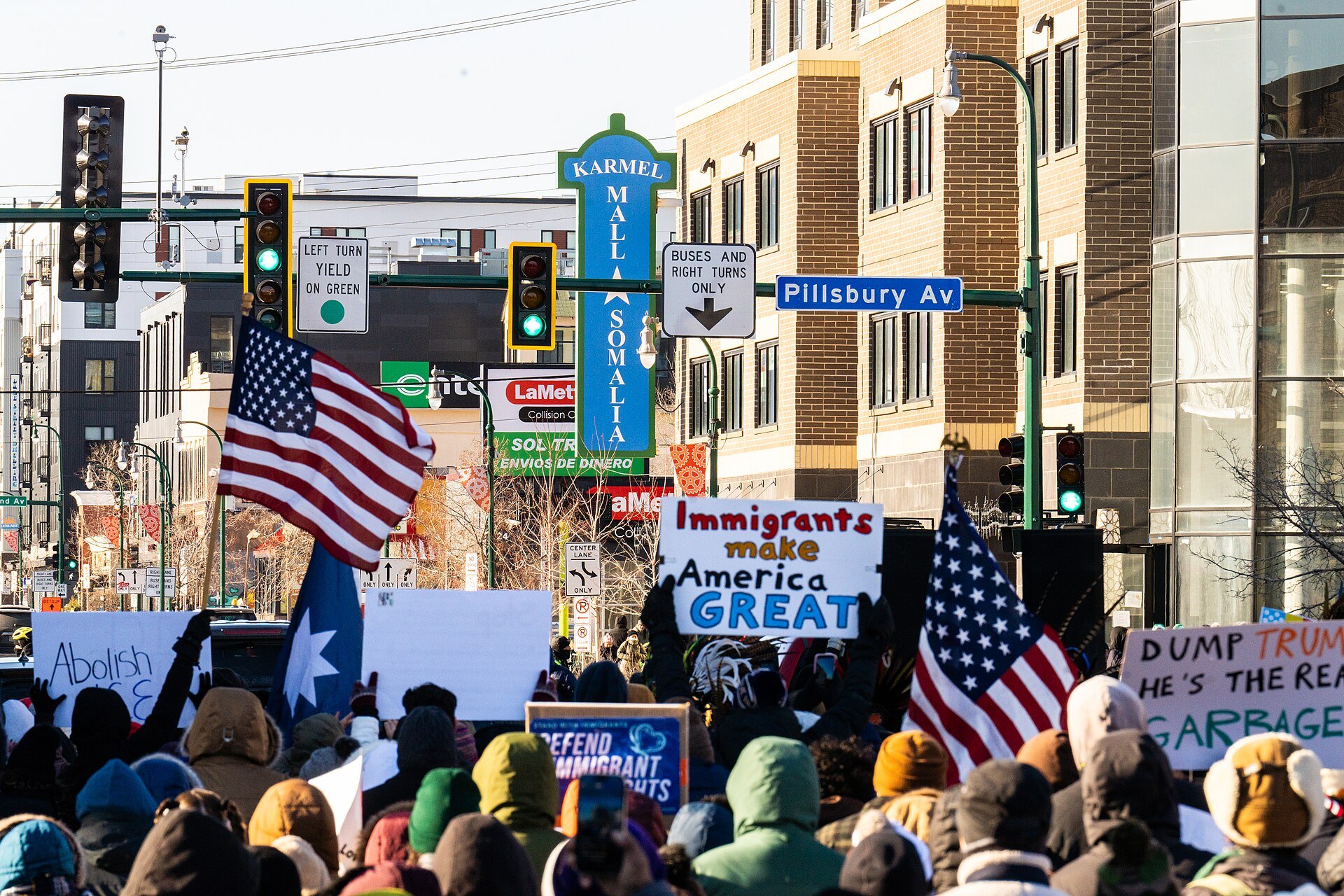
Over the weekend and at Monday’s news conference, community leaders and elected officials went further than anyone with a badge or a law degree has gone. The driver’s niece, Fartuun Mohamed, said the attack was about a name, and that “you don’t choose your name at birth.” State Sen. Zaynab Mohamed said, “We cannot act like violent words do not result in violent action.” State Sen. Omar Fateh wrote on social media on Sunday that Yusuf was the victim of “an attack fueled by hatred towards his Somali identity.” Those are the convictions of people close to the victim and his community, and they carry weight with the people who heard them. They are not findings. Police and prosecutors have said only that bias is under review. On Wednesday evening people held a candlelight vigil at Clocktower Plaza in downtown Hopkins, where Mayor Patrick Hanlon said, in MPR News’s account, that people ask others to turn the other cheek and the Somali community has “run out of cheeks.”
This is where the law comes in. As the Star Tribune describes it, Minnesota has no specific hate crime law. It treats bias as a reason to increase a sentence, and Moriarty has said her office must prove beyond a reasonable doubt that the crime was motivated by bias. On Tuesday her office did not charge bias. In a statement reported by Fox 9, Moriarty said there is insufficient evidence to prove to a jury beyond a reasonable doubt that a specific bias was the motivation for Patel’s actions. At the news conference she said, in Fox 9’s account, that all prosecutors really have is Yusuf’s brother conveying the conversation he heard, that her office will look at any additional evidence that comes in, and that “we don’t have a motive right now.” She also called the climate for Somali residents “absolutely frightening,” the Star Tribune reported, and said she has no indication Patel knew of the comments she linked it to. A remark about a name, reported secondhand, is the kind of evidence a prosecutor wants to hear in the person’s own voice, in a phone record, a recording, a statement to officers or a message. The brother is now the witness the case rests on, and since Yusuf has died he is the only person on the victim’s side who can say what was said in the car. The reports I reviewed do not say whether the call was recorded, and I have asked CAIR-MN who told the family about the remark and what it is based on. Whether it was recorded, and whether Patel says anything more, will decide whether this stays an attempted murder case with a motive nobody can prove, or becomes something more. The FBI declined to comment to the Star Tribune and to MPR News, and the state Bureau of Criminal Apprehension told MPR it is not involved. The Sun Sailor reports that the Hennepin County Sheriff’s Office crime lab and the Minnesota State Patrol are also taking part, alongside Hopkins police and the county attorney’s office, and I have asked the sheriff’s office what its role is.
Meanwhile, the effect on the street does not wait for a verdict. The Minnesota Uber/Lyft Drivers Association said it received hundreds of calls over the weekend from frightened Somali drivers. Minneapolis Mayor Jacob Frey, who also spoke at the news conference, criticized social media platforms and their algorithms for spreading hateful rhetoric about Somalis and other groups. He said “we’ve also got to make sure that stuff like this doesn’t happen again.” What drivers describe is simpler than any of that. A rideshare driver works alone, usually at night, with a stranger the app chose for him, and when something goes wrong there is rarely a witness.
Uber’s answer sits inside that gap. In a statement sent to me on 16 November, while Yusuf was still alive, a company spokesperson said Uber is “shocked and horrified by the details of this senseless attack,” has banned the rider from the platform, is keeping the driver and his loved ones in its thoughts, and continues to support law enforcement. Uber also said it has been in touch with the driver’s family. It pointed to its safety tools: an emergency button that connects to 911, a Follow My Ride feature that lets drivers share a trip’s route with family in real time, GPS tracking of every trip, and Record My Ride, a setting that lets drivers record audio and video. Uber says those recordings are encrypted and stored on the driver’s own device, and that Uber can see one only if the driver chooses to share it. That means some of the most useful evidence in the case may depend on whether one tool, switched on or not, was running that night. Trip data has already served as evidence, since the complaint cites Uber’s records of the car’s path. The statement did not say whether this ride was recorded or any safety alert was triggered, what else Uber has given police, whether the rider had been flagged before, how many attacks on drivers it has recorded in Minnesota, whether it will add protections, or what insurance or compensation covers an injured driver. A driver and labor advocate, Farhan Badel, told MPR that Uber should compensate the family under Minnesota’s rideshare law. Uber has not said whether it will.
Hopkins police have declined to release any further records. In answer to my request under the Minnesota Government Data Practices Act, the department sent only its public information release and said that, because the case is an active investigation, state law (section 13.82, subdivision 7) bars it from releasing more now. The release says the case will go to the Hennepin County Attorney’s Office for review and consideration of criminal charges. That decision has now come, and the complaint does record the remark about the name, on the brother’s account. It is the first time anyone outside the family’s circle has put it on a legal document. It does not settle the question, and the county attorney’s own statement says so. Patel has since appeared in court. On Tuesday Judge Paul Scoggin called the allegations “quite chilling and surprising,” given Patel’s lack of a criminal record, and set bail at the $800,000 prosecutors asked for, the Star Tribune reported. Patel posted bail and left jail on Wednesday afternoon, on conditions that include no alcohol or illegal drugs. His next court date was set for 16 December, before Yusuf died. What to watch is whether anything beyond the brother’s account turns up, and whether prosecutors change the charge. I have also put written questions to the county attorney’s office, the sheriff’s office, CAIR-MN, Hopkins Mayor Patrick Hanlon and Chief Johnson. None has answered me as of 28 November, and I will add what they say.
Mohamed Yusuf died on 28 November, two weeks after the attack. The question prosecutors said they could not yet answer, whether it was driven by hate, is still open, and now the charge against Patel may change too.
Comments
Every comment is read by a person before it appears, so yours will not show straight away. We publish comments that are civil and on the subject. To report a mistake in the piece, use the corrections page, so it is fixed in the piece itself.