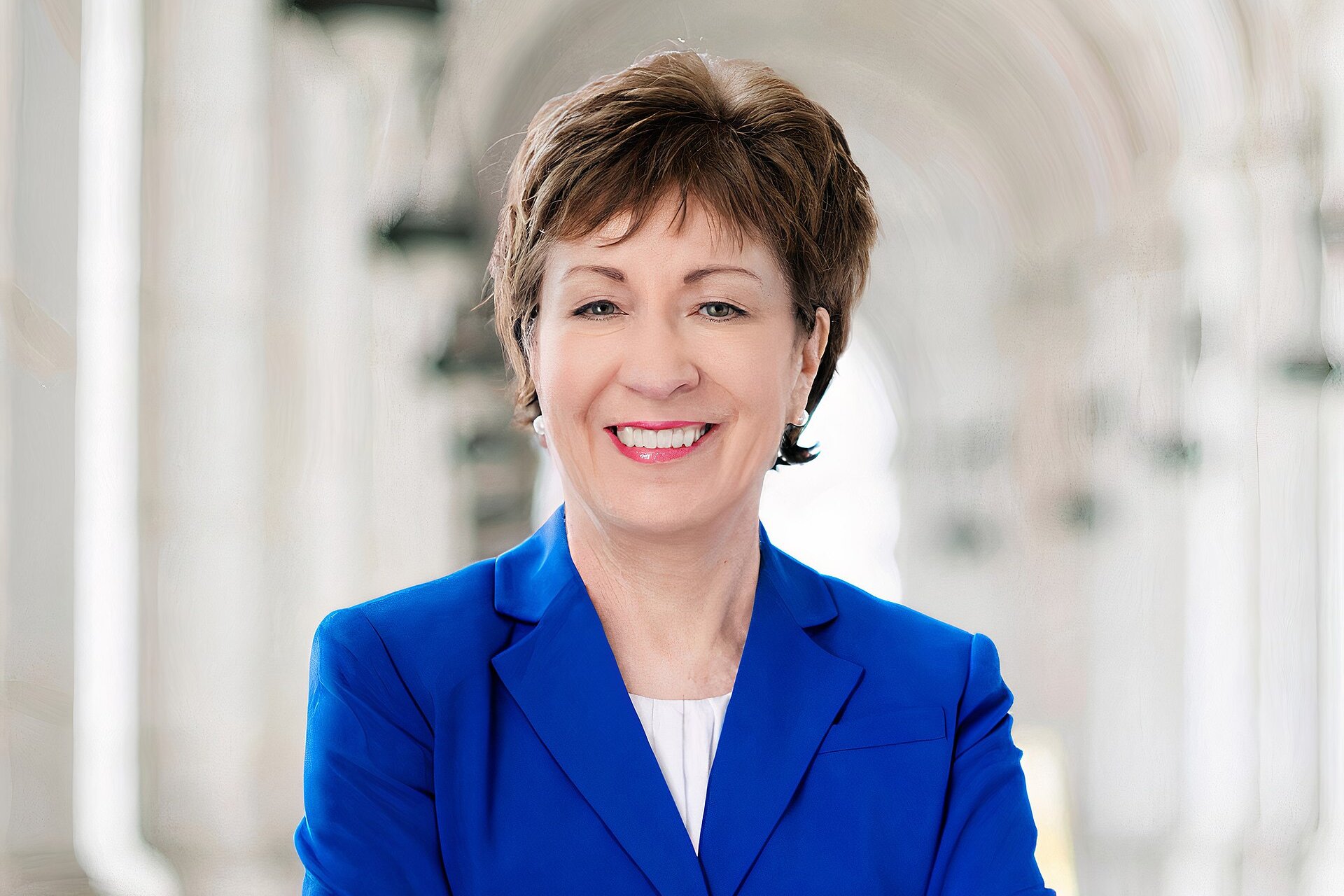
A little after 10 on Tuesday night in Austin, Gov. Greg Abbott told his supporters that he had decided to call Gina Hinojosa and congratulate her on winning the race for governor, as Fox 7 Austin reported and Fox 4 confirmed. He had asked Texans for a fourth term. Hours later, after the Associated Press called Maine’s Senate race at about 1 a.m., Sen. Susan Collins gave no speech. At her watch party in Bangor, supporters waved American flags and campaign workers folded T-shirts, the Portland Press Herald reported, while she phoned Democrat Troy Jackson to concede and her campaign released a written statement. Her statement said she had served for the past 30 years, NBC Montana reported. In Portland, Jackson’s crowd interrupted his speech to sing a union anthem.
She had won five elections in a row. A sixth term would have made her the longest-serving senator in Maine history, according to the same report. Instead Jackson beat her 53.4 percent to 45.4 in the count by Decision Desk HQ, a firm that tallies returns, with 83 percent of the vote in, and Maine had not elected a Democrat to the Senate since 1988, Fortune noted. She was one of at least 38 incumbents, in the Senate, the House and the governors’ offices, whom voters removed on 3 November, and the count is not finished.
By Wednesday evening, CBS News had projected that 22 House incumbents lost, and two more House Republicans, Richard Hudson of North Carolina and Mike Lawler of New York, had conceded even though CBS had not yet projected their races. Since then CBS has projected eight more House Republicans out, Rob Wittman, Addison McDowell, Brad Knott, Tim Moore, Jeff Van Drew, Mike Turner, Juan Ciscomani and Jeff Crank, and has projected Hudson’s and Lawler’s losses, which brings its House total to 32. CBS also reported that four sitting senators lost. Two governors lost, Abbott in Texas and Joe Lombardo in Nevada, and the Associated Press projected both defeats. All but one of the 38 were elected as Republicans, and the exception lost to a fellow Democrat. Our argument is that this was not the ordinary midterm correction in which the president’s party gives back a few seats. Length of service protected no one. Voters removed a senator with nearly 30 years in office, a governor who had been on the ballot statewide in Texas for three decades, and a congressman who chaired his party’s House campaign committee, along with members who had held their seats for only months. And the losses reached into states Donald Trump won by double digits, where Republicans had no reason to expect trouble.
The Senate and the governors
All four Senate losses counted at that point were Republicans, and their histories could hardly differ. Collins took office in January 1997 and was re-elected four times. Roger Marshall of Kansas had been in Congress for a decade, four years in the House from 2017 and then the Senate from January 2021. He won in 2020 by 11 points, and lost to Democrat Adam Hamilton, a pastor, by about 51 percent to 46 in Decision Desk HQ’s count. Hamilton is the first Democrat to win a Senate race in Kansas since 1932, the Associated Press reported. Jon Husted of Ohio had held his seat since January 2025, when he was appointed to the seat Vice President JD Vance left. He lost to former Sen. Sherrod Brown, 50.0 percent to 45.2. Darline Graham of South Carolina had held hers for less than four months. She was sworn in on 14 July to finish the term of her late brother, Sen. Lindsey Graham, according to a report carried by WTOP, and lost to Democrat Annie Andrews, 51.3 to 46.8. Fortune reports that Republicans had held that South Carolina seat since Strom Thurmond switched parties in 1964.
The depth of the three losses in states Trump won easily is the point. Decision Desk HQ compares each result with the 2024 presidential vote in the same state. Trump won Kansas by 16 points, South Carolina by almost 18 and Ohio by 11. The Senate margin in each state moved toward the Democrat by about 21 points in Kansas, 22 in South Carolina and 16 in Ohio, and in all three the Democrat ended ahead. A shift like that is not what happens in competitive states. It happened in states Republicans treat as theirs.
The two governors had very different records. Abbott was sworn in in January 2015 and was seeking a fourth term. Before that he was Texas attorney general from 2002 and a state Supreme Court justice from 1996, so he had been on the ballot statewide for about 30 years. His winning margin fell with each governor’s race, from 20.4 points in 2014 to 13.3 in 2018 and 10.9 in 2022, and this week Democrat Gina Hinojosa beat him 52.8 percent to 45.7, with 99 percent of the vote counted, NBC News reports. Fortune notes that his loss ends a run of Republican governors in Texas that began in 1995. Lombardo had been governor for less than four years. A former Las Vegas police officer and Clark County sheriff from 2015, he won in 2022 by just 15,386 votes, ousting an incumbent Democrat, Steve Sisolak. This time the Associated Press projected that Attorney General Aaron Ford, a Democrat, unseated him and will be the state’s first Black governor, and Lombardo conceded on Wednesday.
The House: who fell, and for how long they had served
The 32 House members split into two groups that point to different explanations. Eighteen had served four years or less. Eight were freshmen elected in 2024 and sworn in that January: Tom Barrett of Michigan, Ryan Mackenzie of Pennsylvania, a state lawmaker since 2012, Rob Bresnahan of Pennsylvania, a construction executive with no earlier elected office, Gabe Evans of Colorado, who had spent two years in the state House, Jeff Crank of Colorado, who lost the 5th District to Democrat Jessica Killin, and three North Carolina Republicans, Addison McDowell, Brad Knott and Tim Moore, who lost the 6th, 13th and 14th Districts. Nine were first elected in the 2022 midterm and had served four years: Max Miller of Ohio, a former Trump White House aide who conceded late Tuesday after a campaign marked by domestic abuse allegations that he denies, Derrick Van Orden of Wisconsin, Zach Nunn of Iowa, Jen Kiggans of Virginia, Tom Kean Jr. of New Jersey, Monica De La Cruz of Texas, Kevin Kiley of California, Mike Lawler of New York and Juan Ciscomani of Arizona. Kiley left the Republican Party in March and is listed by CBS as an independent. The eighteenth was James Gallagher of California, who won a special election in June to fill a vacancy, was sworn in on 10 June, and lost the seat in under five months, after nearly 12 years in the state Assembly.
The other fourteen had longer careers. Mike Turner of Ohio had served since January 2003, the longest of the group, Rob Wittman of Virginia since December 2007, and Bill Huizenga of Michigan, an eight-term member, since January 2011. Scott Perry of Pennsylvania, who chaired the House Freedom Caucus, a bloc of hard-line conservatives, from 2022 to 2024, Ann Wagner of Missouri, a former ambassador to Luxembourg, and Richard Hudson of North Carolina had all served since January 2013, 14 years each. Hudson has chaired the National Republican Congressional Committee, the party’s House campaign arm, since 2023, and he conceded to Democrat Richard Ojeda. David Valadao of California had served nearly 12 years across two stints, having lost his seat in 2018 and won it back in 2020. Brian Fitzpatrick of Pennsylvania had served since 2017, Bryan Steil of Wisconsin and Jeff Van Drew of New Jersey since 2019, and Victoria Spartz of Indiana, Mariannette Miller-Meeks of Iowa and Mike Carey of Ohio since 2021. The only Democrat, Jimmy Gomez of California, had served since 2017.
Where they fell clusters. Fifteen of the 32 sat in Pennsylvania or the Midwest. In Pennsylvania, four Republicans lost: Fitzpatrick in the 1st District, Mackenzie in the 7th, Bresnahan in the 8th and Perry in the 10th. Ohio lost three House Republicans, Miller, Carey and Turner, Wisconsin, Michigan and Iowa two each, Indiana and Missouri one each. North Carolina lost four House Republicans, Hudson, McDowell, Knott and Moore.
The margins show two kinds of loss. Several were narrow, and counts may still move. Hudson, Barrett, Spartz, Steil, Lawler, Wagner, Fitzpatrick, Turner, Van Drew, Crank and Ciscomani trailed or lost by about two to eight points in the latest counts, and Huizenga’s defeat was described as close. The others were not close. Perry lost by about 10 points, Mackenzie by 12, Evans by about 15 and De La Cruz by almost 25, 62.3 percent to 37.7 for Democrat Bobby Pulido. California counts slowly, so the early figures there, including a 66-to-34 lead for Randy Villegas over Valadao, will move.
Our reading is that the pattern in tenure matters as much as the margins. If only newcomers had lost, it would suggest voters were punishing members who had not yet built local roots. If only veterans had lost, it would suggest fatigue. Both groups lost, and a 25-point loss in a south Texas district, or a double-digit loss in a Pennsylvania seat, means a member’s own voters stopped backing them in numbers. We cannot say from results alone why, and surveys of voters leaving the polls will say more. Party leaders have offered their own answers. Trump told reporters that the Iran war, which he said pushed up gasoline prices, affected the result, and Vance blamed the war for the losses, the AP reported. Those are explanations from the party that lost, not evidence. Fortune cites NBC’s survey of voters leaving the polls showing that negative views of the Republican Party rose from 52 percent in 2022 to 59 percent.
The one Democrat, the primaries and the courts
The only Democrat on CBS’s list of defeated House members is Gomez, in California’s 34th District, and he lost to a fellow Democrat. California’s system sends the top two vote-getters in the primary to the general election regardless of party, so two Democrats can face each other in November. Angela Gonzales-Torres, whom CBS describes as a Democratic socialist, led him 56 to 44 with about half the votes counted, per Decision Desk HQ. That is a different kind of defeat from the Republican losses, and it should not be read as part of the same wave.
Incumbents also fell earlier this year, in primaries. In the Senate, John Cornyn of Texas lost the Republican runoff to Ken Paxton, and Bill Cassidy of Louisiana finished third in his state’s primary. In the governors’ races, Rhode Island Gov. Dan McKee lost the Democratic nomination to Helena Foulkes. Those losses were the party’s own voters settling accounts, which is a different story from Tuesday’s.
Below Congress, we did not find a reliable count of state legislators who lost, so none is included here.
What is still undecided
One more Senate incumbent could join the list, and a fifth has already fallen. In Mississippi, NBC News projected on Wednesday 11 November that Democrat Scott Colom defeated Sen. Cindy Hyde-Smith, 49.2 percent to 48.7 with about 98.7 percent counted, the first Democrat elected to the Senate from the state since 1982, NBC says. That brings the total to at least 39. In Alaska, NBC had Democrat Mary Peltola ahead of Sen. Dan Sullivan, 49.0 percent to 47.2 with about 84.3 percent counted, and had not called the race. NBC put Democrats at 254 House seats and Republicans at 169, with 12 races not yet called, on Wednesday evening Eastern time. Several of those could add a name. In Colorado’s 4th District, Democrat Eileen Laubacher led Lauren Boebert by about 3,400 votes with 98 percent counted. In Minnesota’s 1st, Democrat Jake Johnson led Republican incumbent Brad Finstad by about 320 votes, in Tennessee’s 4th, Democrat Victoria Broderick led incumbent Scott DesJarlais by about 280, in North Carolina’s 5th, Democrat Chuck Hubbard led Rep. Virginia Foxx by 335 votes, and in North Carolina’s 3rd, Democrat Raymond Smith led Rep. Greg Murphy by 293. In California’s 40th, two Republican incumbents, Ken Calvert and Young Kim, face each other, so one of them will lose. Since Wednesday evening, CBS and NBC have called many more House races. Eight of those calls ended a Republican incumbent’s career, and they are counted above along with Hudson’s and Lawler’s losses. Some incumbents held on, among them Anna Paulina Luna in Florida’s 13th and Blake Moore in Utah’s 2nd, and several of the newly called races were open seats with no incumbent on the ballot. If Boebert, Finstad, DesJarlais or Foxx loses, the House total would rise again.
Collins’s statement said she had served for 30 years. Bill Huizenga had held his Michigan seat for 16, and Richard Hudson had run the House Republicans’ campaign committee since 2023, the job of protecting members like the ones who lost. None of that carried over to the ballot. The people who beat them will now hold what they held: a seat and a record to defend before the same voters again.


Comments
Every comment is read by a person before it appears, so yours will not show straight away. We publish comments that are civil and on the subject. To report a mistake in the piece, use the corrections page, so it is fixed in the piece itself.