
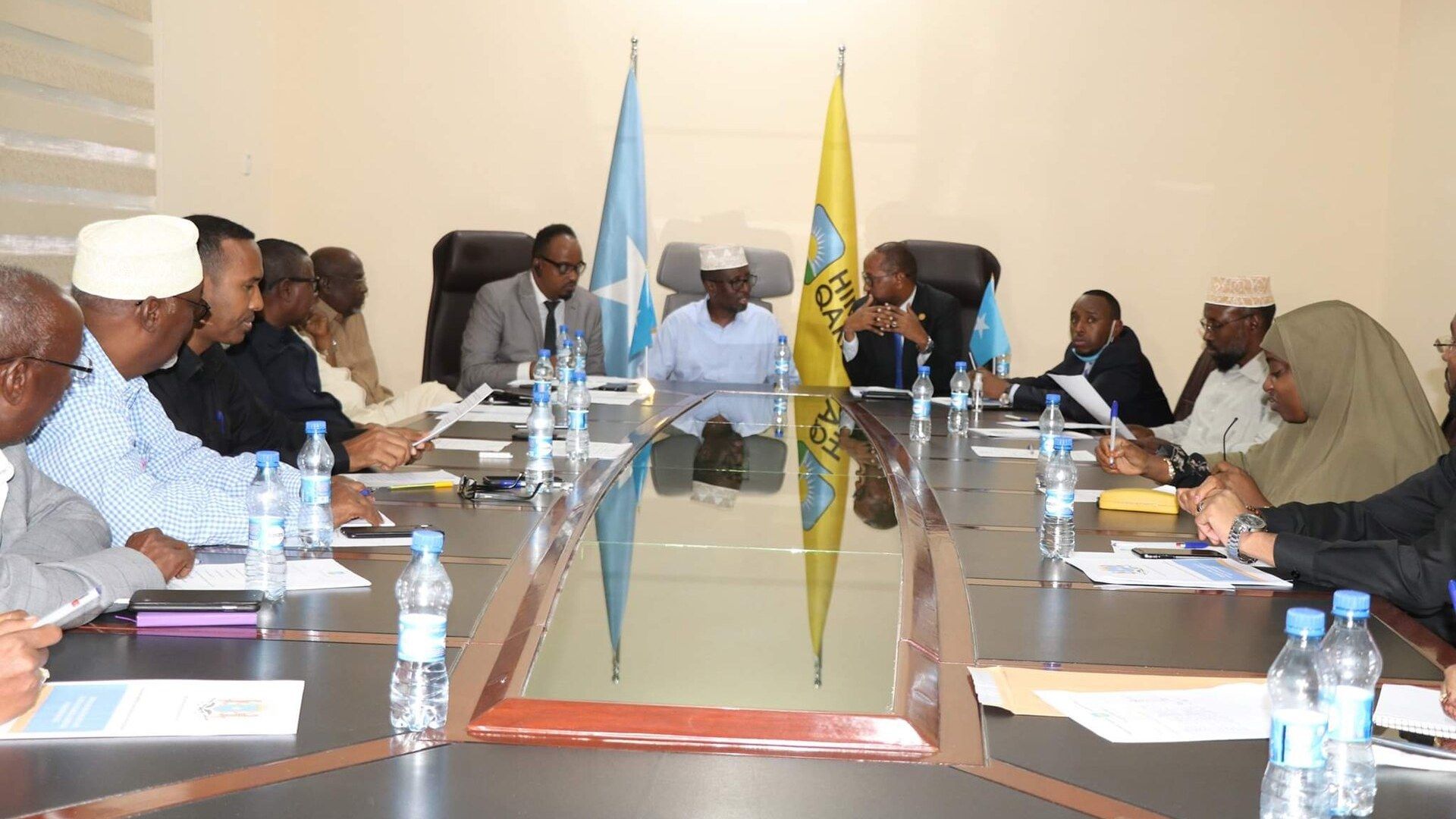
On Thursday, October 22, the day Galmudug’s state parliament elected the ruling Justice and Solidarity Party (JSP) candidate, Liibaan Ahmed Hassan, known as Shuluq, president by 72 votes to 14, Dawan Africa reported, a former prime minister posted two sentences on Facebook. Mohamed Hussein Roble, a leadership member of the opposition Salvation Forum, congratulated the winner and prayed that God would ease the heavy responsibility he had taken on. Three days earlier, the Somali Future Council, the opposition alliance that includes Puntland and Jubaland, had rejected the timetable for the 2027 national vote. Roble’s post says nothing about the timetable, the Council or how the vote was run.
This report asks what the congratulations mean, and what they say about whether Somalia has one opposition or several. My answer is that the opposition has agreed on what it rejects, a government-written plan, and has not agreed on what to do when that plan produces winners. I also argue that the government’s best case, that the court answers every complaint, is narrower than it sounds. On October 25 the president offered a forum as well as a court, and the first thing to check is what he put on the table.
What the opposition has said
The opposition’s objections have been loud and have covered a lot of ground. The Salvation Forum calls the Banadir elections illegal, and the National Salvation Council says one party dominated them, according to the same Dawan report. The candidate Ilyaas Ali Nuur said before the results that a win for the federal speaker under those conditions would be “theft”, and Sharif Hassan Sheikh Aden said in June that “no credible election has taken place in Baidoa”.
Roble himself put his objection to the national vote in writing. On October 15, the day the National Independent Electoral and Boundaries Commission (NIEBC) announced the timetable, he wrote on his Facebook page that he “strongly” opposes and condemns the “one-sided” schedule announced by a president “whose term has expired”. In my translation from the Somali, he said a trustworthy election needs a political agreement and trust that every side accepts, and he warned that the steps could lead the country to “parallel election processes”. The post does not mention the Salvation Forum, and it does not object to direct voting. On the national vote, the Future Council said on October 19 that the timetable was announced without an inclusive agreement, Axadle Times reported. Former President Sharif Sheikh Ahmed says he asked the Supreme Court on October 11 to annul the constitutional changes, and that it accepted his petition on October 12, Dawan Africa reported. The Somali Guardian reports the court gave the federal government until October 22 to file its defence, and Justice Minister Hassan Macalin has said the case went to the Attorney General and that the government will defend the amendments.
Dayniile reported the post, and I checked it on his verified page. Abdikarim Hussein Guled, a former Galmudug president, welcomed the result, and the lawmakers Abdirahman Odowaa and Abdiladif Sanyare also congratulated the new leadership, according to Dawan. The same report says this does not withdraw the opposition’s objections to how the elections were run. WardheerNews wrote that the congratulations raise “an uncomfortable question” and risk creating the impression that the opposition’s objections are negotiable. It also says that recognising an outcome is not the same as endorsing the process. Somali Guardian quoted unnamed analysts calling the congratulations a “political own goal.” Both are the outlets’ views, not reported facts.
The record on Galmudug’s vote itself is thinner than on South West’s. I found no report that the Future Council or the Salvation Forum boycotted it or issued a statement rejecting it, and no outlet I read mentions a boycott. The party Towfiiq, which won the case that voided the July vote, was excluded from the rerun and said so, and I found no statement from it on the presidential vote. The winner got five more votes than the JSP has seats, and Dawan says he thanked rival groups that backed him. I found no statement from Abdirahman Abdishakur Warsame or the former presidents Sharif Sheikh Ahmed and Mohamed Abdullahi Farmaajo about his election. So the fair summary is that the opposition did not reject the Galmudug vote the way it rejected South West’s and Banadir’s, and some of its figures then congratulated the winner.
I set out what happened in the vote, and what the commission changed and kept from July, in my report on the Galmudug rerun.
Is the opposition split?
The congratulations are not the first sign of disagreement. In August 2025, Anadolu reported that a breakaway faction of the Salvation Forum, including former Prime Minister Omar Abdirashid Ali Sharmarke and former speakers Mohamed Mursal and Sharif Hassan Sheikh Adan, signed an electoral agreement with the president. Federal lawmakers would be chosen by popular vote, and they would then elect the president. That is the model the electoral commission now describes for the national vote. In July, WardheerNews reported, citing unnamed sources, sharp divisions in the Salvation Forum over the electoral model, and said Farmaajo had declined to join the Future Council. On September 26, a Future Council committee member said that former Salvation Forum members who attend election meetings with international partners are not part of its camp, and accused them of links with Villa Somalia, the presidential palace, which the outlet says is not independently established.
So the opposition looks like at least three groups. The Future Council, with Puntland and Jubaland, says there is no electoral deal with Mogadishu. Parts of the old Salvation Forum have made one, or attend the meetings. And Farmaajo, whom the Council describes as aligned with its position but not a formal member, stands outside it. The congratulations show that individuals do not treat every state vote as one to fight. They do not show who has left which camp, and WardheerNews says the same.
Roble’s two posts are consistent if his objection is to the national process and not to the result in Galmudug. A simpler explanation may be right: a congratulation is a courtesy, and Caasimada reports that Roble and Liibaan come from the same area, south of Galkayo in Mudug. I cannot tell from the published statements which explanation applies to each person.
In the reports I read, the opposition’s objection is to who writes the rules and who runs the vote, not to direct voting itself. The Banadir elections, which the Salvation Forum calls illegal, were also direct elections. That suggests the dispute is about the referee, the rules and the constitution. If that is right, an opposition that accepts the model but not the referee has less to hold together than one that rejects direct elections outright.
What the president and the commission are telling the opposition
On October 15, President Hassan Sheikh Mohamud told members of parliament, in a speech state television carried, that the government will set the terms of the election, as I described in my report on the speech. He said the government will take the opposition’s ideas it finds appropriate and leave the rest. Then he turned to Galmudug. The court rejected that election, he said, the government never opposed the decision, and it made sure another was held. A similar thing will happen if the federal election goes wrong, he said, because the country has a Supreme Court that will hear the opposition’s complaints.
The head of the electoral commission, Abdikarim Ahmed Hassan, made the same argument from the commission’s side in a video interview posted on October 15. As I understood him, he said the commission is transparent and capable of running federal elections because it has already held elections in Somalia, and that the court is there to step in. The Galmudug case, he said, should reassure the opposition: the court threw out the first vote, the commission corrected the mistakes and held it again, and the court approved it. The same chairman has said nearly 200,000 people voted in the Galmudug rerun, but the commission’s announced results count 149,475 ballots, and I have not seen it explain the gap.
The same message reaches the foreign governments and organisations that have tried to broker talks, and this is my reading of it. The United Nations mission has tried to mediate, according to Geeska, and the Future Council called on October 19 for talks to resume with international mediation. If the answer to every complaint is “go to court”, the partners lose part of their old role as the referee who brings both sides to the table, and a court cannot broker a deal on the rules before the vote. I have found no foreign government saying that it accepts the court in that role.
This is where the opposition’s split matters. The government’s argument is stronger when the opposition accepts Galmudug’s result, because the case then becomes proof that the system works. Each congratulation lets the president say that the process was accepted. I do not suggest that anyone congratulated for that purpose. But the argument depends on the court’s approval meaning more than it shows. The court said it found no admissible complaints under Article 73 of the National Elections Law, Dawan Africa reported. A court can only rule on what is brought to it, and the party that brought the July case was not on the September ballot. The approval shows that no complaint reached the court. It does not show that every weakness the judges listed in August was removed, since the same commission ran the vote from the same register. Whether the court would take a complaint about the rules was a different question, and its first test was Sharif Sheikh Ahmed’s petition, decided on November 5, as the update below explains.
The president’s reassurance is also narrower than it sounds. He offered the court as the answer to complaints about the vote. The opposition’s main complaint is about the rules, which the government says it will set.
Since then two things have happened. Hirshabelle voted on October 24, and in Jowhar its House re-elected the incumbent, Ali Abdullahi Hussein Guudlaawe, 81 votes to 13, Dawan Africa reported. Dawan names two opposition-linked figures who congratulated him, the lawmaker Abdulkadir Osoble and the former internal security minister Mohamed Abukar Islow Duale, so the pattern held for some. I have found no statement on either state vote from the Future Council as a body. And on October 25 the president went on television and said the door to dialogue is open “at all times”, Dawan reported, and his office invited the opposition to a forum in Mogadishu from November 14 to 18. The same day Puntland’s president, Said Abdullahi Deni, said at the opening of his parliament that Puntland will not accept an election process designed only by Villa Somalia, and called for a national conference, Garowe Online reported.
Could the opposition have done better? It could have decided before October 22 what it would say about state votes it did not boycott, so that a congratulation did not read as an endorsement and a silence did not read as consent. The government could have offered the forum before the timetable, not ten days after telling its own lawmakers that there would be no such consultation. The strongest objection to my reading is that a courtesy to a winner means nothing, and that an opposition that refuses to speak to every winner would be unserious. That is fair, and the congratulations alone prove little. What matters is what the opposition does with the offer on the table.
What I do not know. I could not find a statement from the Future Council or the Salvation Forum on the Galmudug vote itself. I do not know why Roble, Guled and the two lawmakers congratulated the winner, because the reports quote little of what they said. I have not seen the full text of the court’s October 13 judgment, and I do not know whether Towfiiq filed a complaint after the rerun. I do not know whether the Future Council will attend the November forum.
Since this report was published, the Supreme Court has ruled on Sharif Sheikh Ahmed’s petition. On November 5 it held that the president’s term had expired. The Somali Future Council then refused to attend the national talks the presidency called for November 14 at Villa Somalia and asked the United States, Britain, the European Union and Türkiye to mediate, Dawan Africa reported. By November 16 the forum had not opened, according to Horn Review. Our report on the court has the ruling.
On October 22 a former prime minister wished a winner well in two sentences. Whether the opposition that includes him can speak with one voice about the next vote is the question those two sentences raised, and it has not been answered.
Comments
Every comment is read by a person before it appears, so yours will not show straight away. We publish comments that are civil and on the subject. To report a mistake in the piece, use the corrections page, so it is fixed in the piece itself.